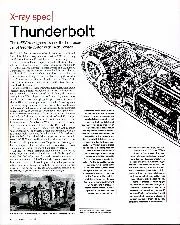
In 1949 he designed and built the Trimax, so called because it was originally intended to accommodate not one but three capacities of engine: 500, 750 and 1000cc. Only one was ever made and it wasn’t a notable success on the track, but the ambition of the car and its designer speak for themselves. Over a decade before Colin Chapman would upset the Formula 1 applecart with the Type 25, Rhiando built his F3 contender around a monocoque aluminium alloy chassis.
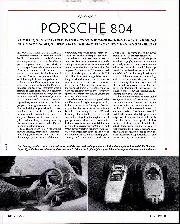
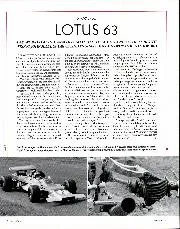
Today the car belongs to Jack Mayes, who talks about the Trimax overleaf. A Chicago architect who owns a small stable of 500s and used to race some of them, he bought the car after knowing about it since its first appearance in the 500 Club’s Iota magazine, in the mid-1990s. As yet, he has not been able to restore it fully. But as the picture below shows it is largely complete and will one day be returned to its original condition. A few years ago Spike Rhiando’s son contacted Mayes and expressed an interest in buying it but the deal was never negotiated.
In the broad sweep of motor racing history the Trimax may barely merit a walk-on part, but it does epitomise the spirit of the time. In particular it represents the ascendancy of novel thinking over brute force and tradition – the very quality that within scarcely more than a decade of the Trimax’s first appearance would see Cooper, another 500 marque, win the F1 drivers’ and constructors’ titles two years in succession.
Steering
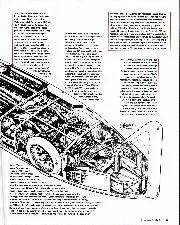
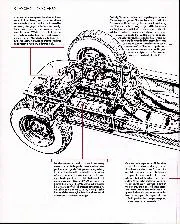
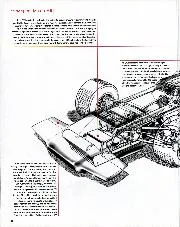
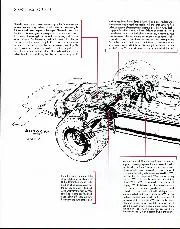
It wasn’t only in the Trimax’s chassis construction that Rhiando took inspiration from aircraft practice — the unusual steering arrangement also owed more to aeroplane than car. “He used a sprocket and chain arrangement to pull on the steering levers,” explains Mayes. “The sprocket is mounted on the steering shaft, behind the front bulkhead. A short chain goes across that and connects to a cable that pulls on the steering mechanism in the footwell.” You can just see the cable running along the right side of the car in the drawing. This flexible linkage probably made the Trimax odd to drive, with little or no ‘feel’ through the steering wheel to warn of the front tyres’ adhesion limit.
Fuel tanks
As well as sharing its construction essentials with that of the Lotus 25, the Trimax also presaged later F1 practice by using aircraft-like bag fuel tanks within the two roughly square-section side sponsons at either side of the car, each of which held 5.25 gallons (24 litres) of fuel. These were inserted through small inspection panels and inflated with compressed air to fill the space. “But the bladder tanks had long disintegrated by the time I got the car,” reports Mayes. “It came with an upright tank behind the driver.”
Suspension

On the grid at Goodwood in 2011
Getty Images
Suspension springing front and rear is by Metalastik units attached between the chassis and the inboard ends of the welded steel swing arms, which are trailing at the front and leading at the rear. “It’s a rubber in torsion suspension: two short pieces of steel tube of different diameters with rubber bonded between them. The outer ring is bolted to the chassis and the inner carries the swing arm.” Despite this simplicity, which had the advantage of saving weight compared to conventional springing, wheel travel was reportedly a generous five inches.
Gear lever and handbrake
The large handles on either side of the tub, just ahead of the cockpit, served two different purposes. The one to the right of the driver was the gear change, while its opposite acted as a handbrake. “The regulations at the time for 500s required this. As I understand it, this was because the start at Brands Hatch is slightly downhill. You had to be able to hold the car on the line yet you were using your right foot to blip the throttle because 500s don’t idle very well. You’re on methanol and the idle jet is not large enough. With a number of the cars all they did was add a handbrake with a cable which operated the balancing lever on the master cylinder. I would guess that it’s the same arrangement here but I don’t have the master cylinder so I can’t be sure.”