


Mat Oxley: Wily Keith Campbell rose from skint dreamer to the first Aussie motorcycle world champion
Recalling the short career of a gritty rider, as a new book documents the life of Keith Campbell, Australia’s first motorcycle world champion

Aussie rider Keith Campbell learnt how to survive on the European circuit of the 1950s
Moto Guzzi
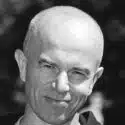
Seven decades ago, Keith Campbell became the first Australian to win a grand prix world championship, on two wheels or four. Campbell was a member of the Continental Circus, the celebrated gang of riders that had criss-crossed Europe each summer since the 1920s, living hand to mouth, earning just enough money at one event to buy petrol to get to the next. Unless they could steal it…
“Most meetings used to supply petrol free,” recalled Campbell’s contemporary ‘Happy’ Jack Ahearn (nicknamed for his grumpy demeanour). “So, when the bloke filled the tank up, I’d do one or two laps, go into the pits, drain the petrol into my truck and when the truck was full I knew I could make it to the next meeting. With no money, you had to be a bit of a rat, otherwise you wouldn’t survive.”
Campbell’s story is typical of the gritty Australians of that era who sailed halfway round the world to chase their grand prix dreams, but all the more remarkable because he was the first and one of the very few to fight his way to the top. Over the next three decades only two other Australians won world titles – Kel Carruthers in 1969 and Wayne Gardner in 1987.
“Excuse me chaps, what are they paying for first place and fastest lap?”
A tough upbringing in wartime Melbourne must’ve helped prepare Campbell for the rigours of racing. Like most bike-mad Aussie youngsters his dreams were fired by reading Isle of Man TT reports in the British motorcycle papers, which arrived down under by sea mail.
Campbell started racing in scrambles events in 1948. Two years later, aged 19, he was on his way to London, all alone, aboard a dilapidated liner, with £30 in his pocket and a Velocette KTT 350 as personal luggage.
First time out on the Isle of Man, he was badly injured when he crashed in thick fog. He spent two months in hospital, 12 more weeks at sea (home and back again) and a winter working on the Norton production line in Birmingham before he commenced his first continental campaign.
Campbell and countryman Gordon Laing sallied forth with four race bikes crammed into the back of a wartime ambulance. “They could only just fit the four bikes, so they slept on a board above the machines,” writes Don Cox in his newly published biography Keith Campbell: Australia’s First Grand Prix World Champion. “Whenever they opened the back doors, washing basins, oil tins, clothes, spare parts and tyres fell out.”
Campbell was skint but not for long. He worked out how to make a quid in Europe – non-championship races paid better than grands prix, where promoters paid very little because they knew most riders were desperate for world championship points.
“Keith figured he could base himself in France and make a tidy living at international meetings,” recalled one fellow Circus racer. “He reckoned he’d be sitting having a coffee on a hotel balcony in France while the other private entrants were riding for a pittance in a grand prix.”
Each summer Campbell raced most weekends, usually around the streets of France, Belgium, Germany, Italy, Sweden and the Netherlands, plus the occasional grand prix, where he hoped to catch the eye of the big-spending Italian factories that dominated the 1950s – Gilera, Moto Guzzi and MV Agusta.
Soon he was driving around in a Cadillac, towing his 350 and 500 Norton singles – the usual privateer’s stable – in a huge box trailer and staying in hotels, not tents. He was such an operator that his Aussie mates nicknamed him ‘Cappo’, for capitalist.
“We’d be working away and Keith would glide up in his Yank tank,” remembered another rival. “He’d wind down the window and ask, ‘Excuse me chaps, wonder if you’d tell me what they’re paying for first place and fastest lap.’”
Then Campbell would climb out of the Cadillac and ask, “Which way does the track go and what’s the lap record?”
His speed and determination finally impressed Guzzi into signing him to race their wondrous 350cc single and remarkable V8 500 in 1957. The 500, unsurprisingly, was unreliable, but Campbell dominated the 350 world championship, taking victories at Assen, Spa-Francorchamps and Dundrod in Northern Ireland to better Scot Bob McIntyre, riding a four-cylinder Gilera.
Then his luck turned. Guzzi quit racing at the end of 1957 and Norton reneged on their subsequent offer of support for 1958. Campbell was a privateer once again. He also dabbled in car racing, driving a Maserati 250F in British and European events.
At Spa he showed his dazzling talent once again, riding his Norton single to second place in the 500cc GP behind John Surtees’ four-cylinder MV Agusta. A week later he was dead. Campbell was killed instantly when he crashed on oil during a non-championship meeting at Cadours, near Toulouse, France. He became the fifth Continental Circus Aussie to lose his life in five years.