


F1
Hamilton's cutting question that Vasseur failed to answer
Hamilton backed Vasseur at Sepang while saying the hierarchy above him is "a question". A day later, Vasseur's answers were only about relationships and unity

We were saddened at Motor Sport to learn of the death last Thursday of Gérard Ducarouge, one of racing’s great designers.

The Frenchman’s cars were winning at the top level from the late ’60s to the late ’80s, starting with the Matra MS10 with which Jackie Stewart finished second in the F1 championship in 1968. The following year the Matra MS80, with Cosworth power, took Stewart to the first of three world championships.
Next Matra went to Le Mans, where Ducarouge’s stunning prototypes won three in a row from ’72-74, with Henri Pescarolo, Gérard Larrousse and Graham Hill driving.
Read ‘lunch with’ Henri Pescarolo
When Matra pulled out of racing as a constructor, Ducarouge went to Ligier, where his cars won eight Grands Prix from 1976-81 with Jacques Laffite, Patrick Depailler and Didier Pironi behind the wheel. He was actually fired halfway through that last season, despite the JS17’s competitiveness in the hands of Laffite, and headed to Alfa Romeo to help build its first carbon fibre chassis.
Read about Jacques Laffite’s time at Ligier in the ’70s and ’80s

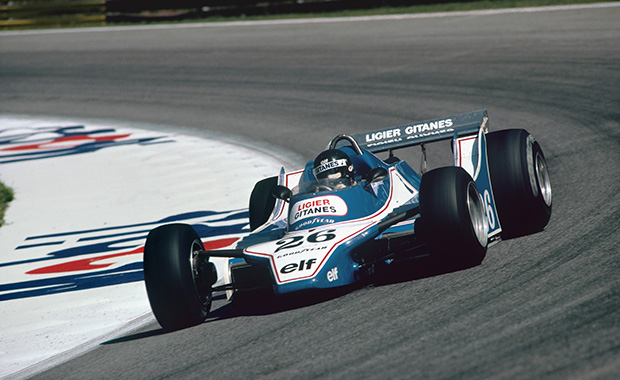
Ducarouge was fired in 1983 because one of the Alfas was disqualified from the French Grand Prix for being underweight, but he didn’t spend long on the sidelines. Peter Warr snapped him up to work at Lotus, which was looking for a guiding hand following the sudden death of Colin Chapman.
Then came Ayrton Senna and one of the sport’s golden eras.
Read about the four-way battle for supremacy in ’80s F1
Ducarouge finished his racing career with some familiar faces at Larrousse and Ligier before heading back to Matra, where he worked as an international development director.

Hamilton backed Vasseur at Sepang while saying the hierarchy above him is "a question". A day later, Vasseur's answers were only about relationships and unity

Tropical storms, team orders and some legendary drives. We pick the best F1 races in Malaysia, plus a bonus two-wheel spectacular

Formula 1 wants its 2030 engine simpler, cheaper and louder. Now it needs to agree how to get there quickly

James Vowles believes the cost cap has made Formula 1 less competitive, not more. His argument has real force, but it also rests on a decade of underinvestment that the cap didn't create