As the Monaco circuit prepares for the first of three major races this year, we look at its glorious history and the legendary drivers who have lit up the streets of Monte Carlo
“Extremely tricky”. That was how Motor Sport chose to describe the new Monte Carlo track on the occasion of its first grand prix in 1929.
Approaching a century later, that verdict still applies to the world’s most famous street circuit.
The tramlines may have long disappeared and the harbour water is considerably better-screened, but the twisting course of the Principality’s roads, lined with unforgiving walls still represent one of racing’s greatest tests.
In the May issue of Motor Sport, we celebrate the enduring challenge of Monte Carlo, and the drivers who have revelled in its streets.
We highlight the multiple winners whose talent placed them on another level to rivals, exploring their great drives and the secrets to their speed.
In the infographics on this page, supplied by Made From Data, we look at the evolution of the circuit, ahead of the Monaco Grand Prix on May 23.
The shape has changed little from 1929, when the first grand prix was held, but minor modifications have altered the track through history.
Despite the addition and alteration of chicanes, lap times have tumbled, culminating in Lewis Hamilton’s track record in qualifying, 2019. The race lap record is held by Max Verstappen, who inherited it from Michael Schumacher in 2018.
The Monaco masters who dominate the list of most successful drivers at the circuits are led by Ayrton Senna who was the only Formula 1 driver to win there between 1989 and 1993 — a Nigel Mansell tyre issue in 1992 helping him to continue the winning streak.
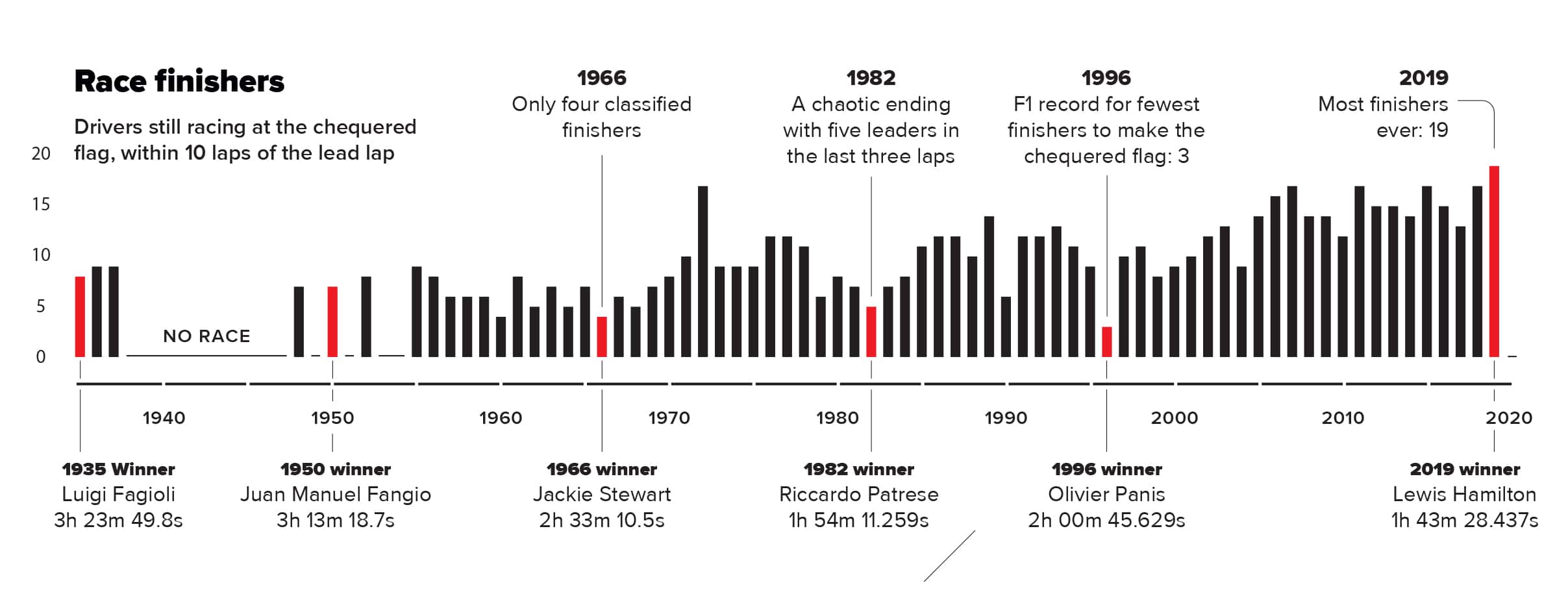
Of course, in some years, just keeping it on the road is enough for a strong finish. A damp, slippery track in 1996 caught out even Michael Schumacher. He topped the ever-lengthening list of retirements that drove Murray Walker to increasing levels of excitement, as he witnessed a scene that was unprecedented even to him.
In the end, Olivier Panis crossed the line first, ahead of just two other cars that made the chequered flag.
It was reminiscent of earlier years when the bumpy road course was a test of durability for F1 cars that weren’t built so tough. Retirements have always been on the high side, however, thanks to the close proximity of the walls that mean that a slight twitch can easily end in a race-ending crunch.
This year sees three major race weekends in Monte Carlo, beginning with the Historic Monaco Grand Prix, followed by the Formula E meeting, and then the Formula 1 race.
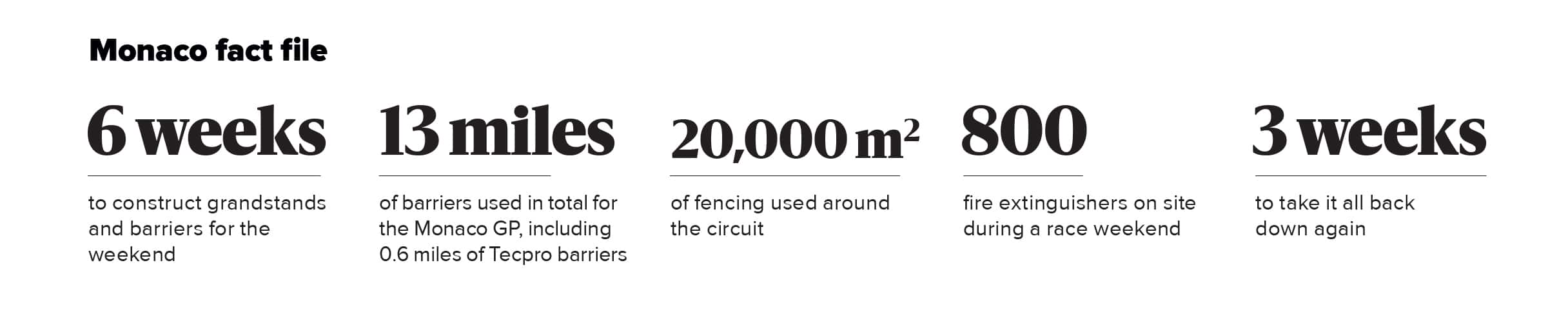
Construction work began in February, as miles of barriers and fencing were erected around the two mile circuit.
Read the May issue of Motor Sport for our pick of the six drivers who can truly be named Monaco masters, along with the view of more past racers and team members, plus 20 of the key races in its history.