F1
‘A peculiar absence’: Why is there no German Grand Prix?
It is now August, and these days that means that the Formula 1 circus is packing up and going on holiday: the summer shutdown. But for old boys such as…


Turkey will return to the calendar next year
Grand Prix Photo
Formula 1 confirmed on Friday that Turkey will return to the calendar in 2027, ending a five-year absence that few in the paddock could convincingly justify.
Istanbul Park is a genuinely great circuit: fast, technical, anti-clockwise, with a Turn 8 that drivers have compared to Eau Rouge and 130R, and its disappearance stripped the calendar of one of its most interesting venues.
Its return, under a new five-year deal, is good news for the sport.
It is also a reminder of how much has been lost. The modern Formula 1 calendar runs to 24 races and includes events in Las Vegas, Qatar, and two in the United States.
It doesn’t include a race in Germany or Africa, however.
The sport’s appetite for new markets and sovereign wealth deals is not in itself a problem, but it often highlights that the expansion has come at the cost of the geography and circuit DNA that gave Formula 1 its identity.
Turkey’s return proves it can be done. Here are some others that should follow.

Hockenheim’s last F1 race was a classic, in 2019
Grand Prix Photo
The absence of a German Grand Prix is one of the genuinely peculiar facts of modern Formula 1.
The country that gave the sport Mercedes, which made Michael Schumacher the dominant figure of his generation, that produced Sebastian Vettel and countless other race winners, and that currently has two teams on the grid, has no race.
The last German Grand Prix was held in 2019 at the Hockenheimring, and as of 2026, no replacement has been scheduled.
It is now August, and these days that means that the Formula 1 circus is packing up and going on holiday: the summer shutdown. But for old boys such as…
The 2019 race was, in fairness, a fitting send-off. Max Verstappen won after pole-sitter Lewis Hamilton crashed behind the safety car, losing his front wing and receiving a penalty for entering the pitlane on the wrong side of a bollard.
Verstappen, Daniil Kvyat and Lance Stroll formed an unexpected podium in treacherous conditions, the kind of race Hockenheim specialised in.
The principal reason for its absence from the calendar is that the government will not subsidise hosting fees.
The fee Liberty Media charges is estimated at around $50 million per race, a sum that cannot be covered by ticket sales alone.
The Hockenheimring has since changed ownership, with the new management expressing cautious interest, but no deal has materialised.
That Formula 1 doesn’t currently race in Germany, one of the European continent’s most motor sport-saturated nations, remains very strange.

Sepang admits it was a mistake to give up on F1
Grand Prix Photo
There is probably no circuit on this list whose absence feels more arbitrary.
Sepang was dropped after the 2017 Malaysian Grand Prix, not because of any failure of the track itself, but because the Malaysian government decided the economics no longer added up due to falling attendance and unsustainable hosting costs.
After 19 seasons on the calendar, every one of them at Sepang, the race was not contracted for 2018 and beyond, and Formula 1 quietly moved on.

 Great Read
The Sepang circuit was a challenging, exhilarating stage where Formula 1 greats shone brightly — but not the first to host a Malaysian Grand Prix. Matt Bishop explores the rich history of the race, and why it deserves a spot on the F1 calendar — despite the perils of the odd king cobra
Sepang’s CEO admitted in 2025 that it was a mistake to let F1 go because of how hard it was to get it back.
The circuit it left behind remains one of the best Hermann Tilke ever designed. The 3.4 mile layout combines a pair of extended straights with fast, flowing corners and tight technical sections that reward mechanical grip and driver precision.
The tropical climate, a particular combination of soaking heat and sudden tropical downpours, produced genuinely unpredictable races year after year.
Sepang still retains its Grade 1 FIA certification and is considered one of the most requested returns. The circuit still hosts MotoGP, but the commercial obstacle remains the hosting fee and an F1 calendar that’s too busy as it is.

Mugello’s one-off race was pure chaos
Grand Prix Photo
Mugello has hosted exactly one Formula 1 race. That it was widely considered one of the best circuits in the sport, long before that September afternoon in 2020, makes the situation all the more frustrating.
Ferrari purchased Mugello in 1988 and has used it as a testing ground ever since. Drivers have been effusive about it for decades. Mark Webber once said that 10 dry laps at Mugello were worth 1000 at Abu Dhabi in terms of driving satisfaction. Sebastian Vettel described it as a circuit that Formula 1 was wrong not to include.
Its 15 corners are mainly medium to high speed, with no tight chicanes or big braking zones throughout the 3.2 mile lap. The Arrabbiata right-handers, taken at around 160mph, define the character of the place.

Mugello has been the home of Rossi mania and lately a fortress for Ducati… but the Italian circuit is chiefly synonymous for the biggest rush in MotoGP racing
The 2020 Tuscan Grand Prix, staged as part of the pandemic-era calendar and also to celebrate Ferrari’s 1000th race in the championship, delivered what the circuit promised, with two red flags and three standing starts in an afternoon filled with chaos.
Formula 1 media’s own post-race coverage concluded that track, location and racing had all delivered, and that the weekend would live long in the fans’ memory.
And yet, Formula 1 has not returned.
Finances aside, if the sport is serious about adding circuits on merit, Mugello makes the argument easily.

The weather often contributed to Nürburgring’s spectacle
Grand Prix Photo
The Nordschleife will not host Formula 1 again, and also shouldn’t, but the modern GP circuit, constructed in the 1980s and sitting adjacent to the legendary loop, is a different proposition entirely.
Germany hosted the Eifel Grand Prix at the Nürburgring in 2020 as a pandemic replacement event, and the weekend served as a reminder of what the circuit can offer.
The cold, unpredictable Eifel mountain weather can transform a race entirely; the layout has a genuine variety of corners, and it contains a specific atmosphere that no recently constructed venue can manufacture.
The 2020 race, when the mist came down over the circuit, was a brief, genuine example of the kind of atmosphere that few modern Formula 1 venues can offer.
The commercial situation mirrors Hockenheim’s.
There is no government subsidy and no manufacturer willing to fill the gap, but the Nürburgring remains in operation, retains its facilities, and proved in 2020 that it can deliver a weekend Formula 1 would be proud of.
Whether the sport returns here or to Hockenheim, it should return somewhere in Germany.

Kyalami is one of Africa’s potential venues for an F1 return
Grand Prix Photo
The fact that a so-called world championship hasn’t raced in Africa since 1993 sits more awkwardly with every new circuit added to the calendar.
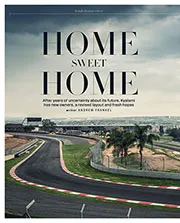
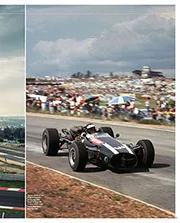
The South African venue hosted Formula 1 across two distinct eras: from 1967 to 1985, and again in 1992 and 1993.
The first era ended when political sanctions related to apartheid forced its removal from the calendar after 1985. The second ended more prosaically, with promoter bankruptcy after just two races.
Formula 1 has not been back since.
The original circuit, lost to a 1988 rebuild, was the one drivers remember most fondly. A long main straight crested the brow of a hill opposite the pits before descending to the demanding first corner at Crowthorne. It was a classic old-school layout that rewarded courage.
The rebuilt version, which hosted the 1992 and 1993 races, was widely considered inferior; overtaking had become almost impossible, and processional races the rule.
The modern circuit, under new ownership since 2014, could be a different proposition.
The FIA accepted Grade 1 upgrade proposals in 2025, giving Kyalami three years to complete the works, meaning a return could be feasible as early as 2028.
Lewis Hamilton, with his long-stated desire to race in Africa, has been publicly vocal about the prospect.
The political complications that blocked a proposed 2024 return, related to South Africa’s position on the Ukraine conflict, have not entirely dissipated, and competition from Rwanda, Morocco and Nigeria adds complexity.
But the sporting case is simple enough: a world championship without a race on the second-largest continent is a gap that no amount of Las Vegas glamour fills.