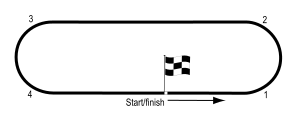
This two-mile dirt oval six miles north of Sioux City was the idea of local Cadillac dealer Charles M. Wycott after he had attended the inaugural Indianapolis 500 in 1911. Two organisations – the Speedway Association and Sioux City Automobile Club – were formed to promote the car and motor racing in the region and an area of farmland north of the Big Sioux River acquired. The dirt track opened in 1912 but it was two years before the impressive grandstand was completed. The track surface was repaved with 30,000 gallons of crude oil and dirt in time for the Sioux City 300 on 4 July 1914, with an electronic timing system also installed. Eddie Rickenbacker beat Spencer Wishart in front of an estimated 42,000 crowd that day but his repeat victory in 1915 was marred by tragedy. Rickenbacker’s Maxwell collided with Charles Cox’s Duesenberg as he lapped the Ohio native. Rickenbacker was able to continue but Cox crashed and died a day later from the injuries he had received. Sioux City Speedway closed after a final meeting on 4 July 1917. The site was redeveloped as an airfield which was initially named after Rickenbacker and is now known as Graham Field Airport. A half-mile dirt oval known as Airport Speedway was operated for a single season on the site in 1937.