Why Rwanda beat South Africa to F1’s African return
Rwanda has secured Africa's first grand prix since 1993 even though it has no circuit, unlike South Africa and Kyalami. The deal says a lot about what F1 wants from a host now
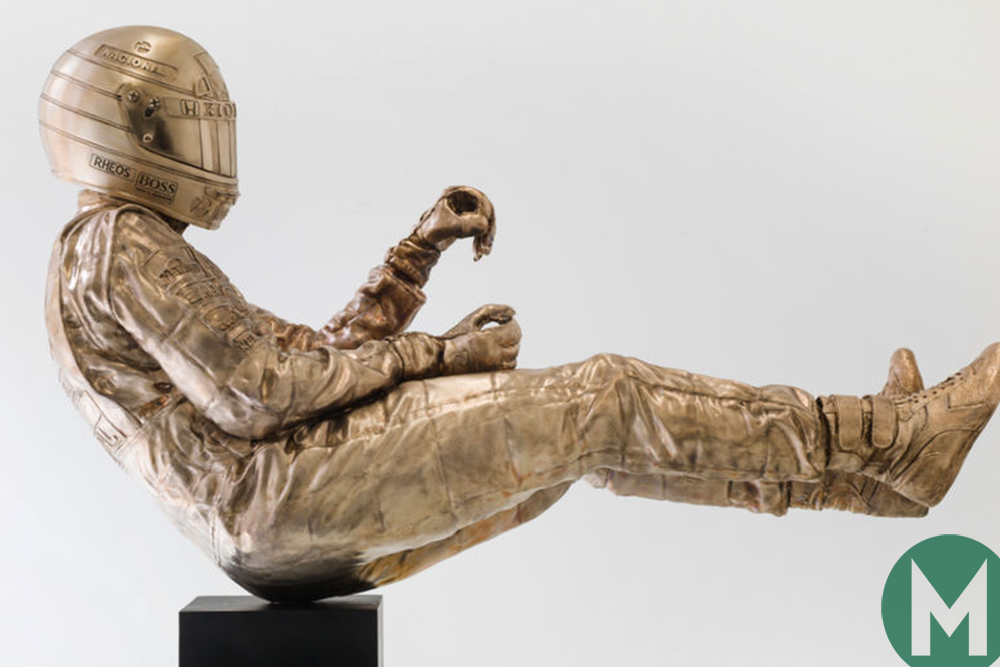
Incredibly detailed sculpture portrays Senna’s position driving through iconic Eau Rouge

You may have seen a stunning life-size bronze statue of Ayrton Senna driving through Eau Rouge that was unveiled at the Autosport International Show.
The statue portrays Senna in the unusual pose of driving through the fabled Spa-Francorchamps corner in his cramped Formula 1 cockpit.
It weighs in at some 160kg of raw bronze and took more than a year to complete by sculptor Paul Oz and his team.
They used hundreds of 2D images to create a 3D model. The model was then resurfaced in clay, with detail such as the patches on Senna’s overalls added. Then wax casts were made of the clay model and the statue was finished in a foundry. Well, that seems like the short version of the process, anyway.
This is a wholly official project: just three life-size statues will be created, with one sent to the McLaren Technology Centre, the other to Brazilian non-governmental organisation Instituto Ayrton Senna and the third available for sale.
The price? A whopping £199,000. But 10 per cent goes to the NGO, so it’s for a worthy cause.

More: McLaren P1 ‘Beco’ pays homage to Senna
And if that’s out of your budget then there are some smaller statues available, with 41 ‘wind-tunnel’ versions setting you back £49,000.
Oz’s work celebrates Senna’s five wins at the Belgian Grand Prix and also marks 25 years since Senna’s final F1 race.
“If you take away Eau Rouge, you take away the reason why I do this,” said the artist.
“It’s a position alien to most and even many F1 fans don’t appreciate how extreme it is, even back in the 1990s, although more so now.
“If there’s one thing I am happiest about with this statue is the dynamic and balance of the position.”
Rwanda has secured Africa's first grand prix since 1993 even though it has no circuit, unlike South Africa and Kyalami. The deal says a lot about what F1 wants from a host now
Fifty years on from James Hunt’s back-to-back victories at Mosport and Watkins Glen, Matt Bishop revisits two races that remind us why F1’s past can still outshine its present
Ferrari’s run of strategic misjudgements may have given Hamilton reason to doubt the pitwall, but Singapore showed that it can often backfire
Mark Hughes analyses how Max Verstappen beat Charles Leclerc to victory in Singapore, and how Lewis Hamilton’s strategic gamble turned a promising Ferrari result into a costly disappointment