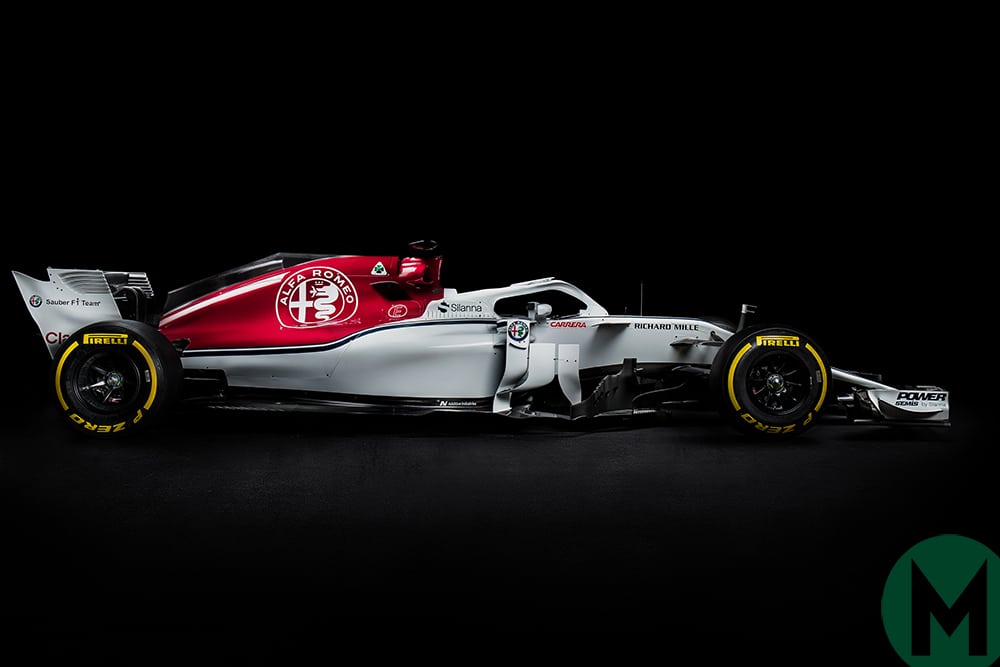
Mark Hughes looks at the key points of the Alfa Romeo Sauber C37
Like Red Bull, Sauber has opted not to take up the full permitted width of the sidepods, implying a significant reduction in drag. The radiator openings are much smaller than those of last year’s car.
The front suspension is mounted high, with extreme extensions upon the wheel hub to get the upper wishbone up out of the airstream. This was done last year on the Mercedes W08 and Toro Rosso STR12, but this is more extreme.
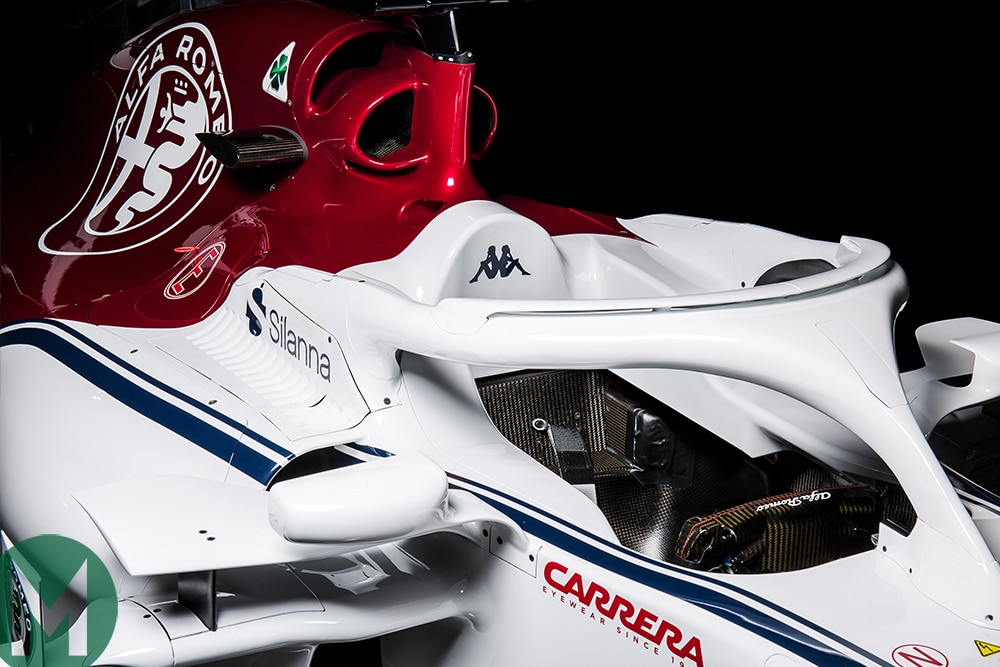
The horizontal guide vane at the side of the cockpit is mounted atop the side impact structure. It is not clear from the angles of any of the pictures whether this side impact structure has been used to comply with the 75-degree bodywork sweep-back requirement – as with last year’s Ferrari – but it would seem likely. This should allow the car a better combination of good airflow with compact dimensions.
The suspension layout has enabled the sidepod radiator inlets to be mounted down very low (the exact opposite of last year’s Ferrari and this year’s Williams). What is also apparent is that the inlets themselves are split – there is a secondary inlet above the side impact structure and horizontal guide vane.
A similar innovative split arrangement is evident on the engine cover inlet
The middle of the three tall white vanes by the side of the cockpit is the side impact structure.
In previous lives Mark raced cars, worked at Jim Russell racing school, got a university degree which he never used, tried working in industry, didn’t like it, left and joined Motoring News in 1988 as a junior club race reporter. Went freelance in ’96, concentrated on F1 from 2000. Grand Prix editor of Autosport for 10 years.