A race victory is already a glorious occasion but when that win comes on home soil, there’s an added feeling of triumph that goes with it.
Whether the win was aided by national support (worth up to 1sec per lap according to Nigel Mansell); the knowledge that comes from racing on your local circuit; or was simply the result of a great drive, the chances are that the champagne will taste sweeter.
Here are some of the most memorable, significant and emotional home wins in grand prix history.
An exhausted Senna crosses the line to win at Interlagos. Moments later, his troubled car would stall
Paul-Henri Cahier/Getty Images
Ayrton Senna 1991 Brazilian Grand Prix
By 1991, Senna was a double world champion, popularly seen as the greatest driver of his era, and drove for the most dominant team. And yet a home victory in Brazil had so far eluded him.
Interlagos brought hope for the 70,000-strong crowd in 1991 as Senna first held off a chasing Mansell, then pulled away as the Williams pitted.
Victory looked certain — and then impossible, as the McLaren began losing gears, leaving Senna stuck in sixth. Mansell had retired but Riccardo Patrese’s Williams was catching and the final gap was 2.99sec: too close for comfort but enough for an exhausted Senna to finally win in Brazil.
“In the closing laps I just had to leave the car in top gear,” said the emotional race-winner. “The rain didn’t help me, and I was really hoping they’d stop the race. In the slow corners I was pulling only 2000 rpm and the engine was nearly stalling. In the fast corners the car always wanted to push straight on.
“I saw Patrese coming and didn’t think I would make it, but I felt it was my duty to win here. I pushed the car regardless of the rain, but I was getting cramps and muscle spasms in my upper body. Partly that was because the safety harness was so tight, but also because of emotion! By the finish I had nothing left. God gave me this race.”
Fangio’s final home win might have been his greatest
El Grafico/Getty Images
Juan Manuel Fangio 1957 Argentine Grand Prix
El Maestro took four consecutive wins at his home grand prix, but the final victory in 1957 might just have been his best. In sweltering conditions which broke both man and machine, Fangio hared off into the distance and never looked back.
The Motor Sport report from Silverstone tells it best: “He made fastest time in the Friday morning test-session, fastest time in the Friday Qualifying period, fastest time on Saturday morning, fastest again in Saturday Qualifying, fastest in the Sunday morning “warm-up” session, and fastest lap in the race which set a new record for the new Silverstone circuit.”
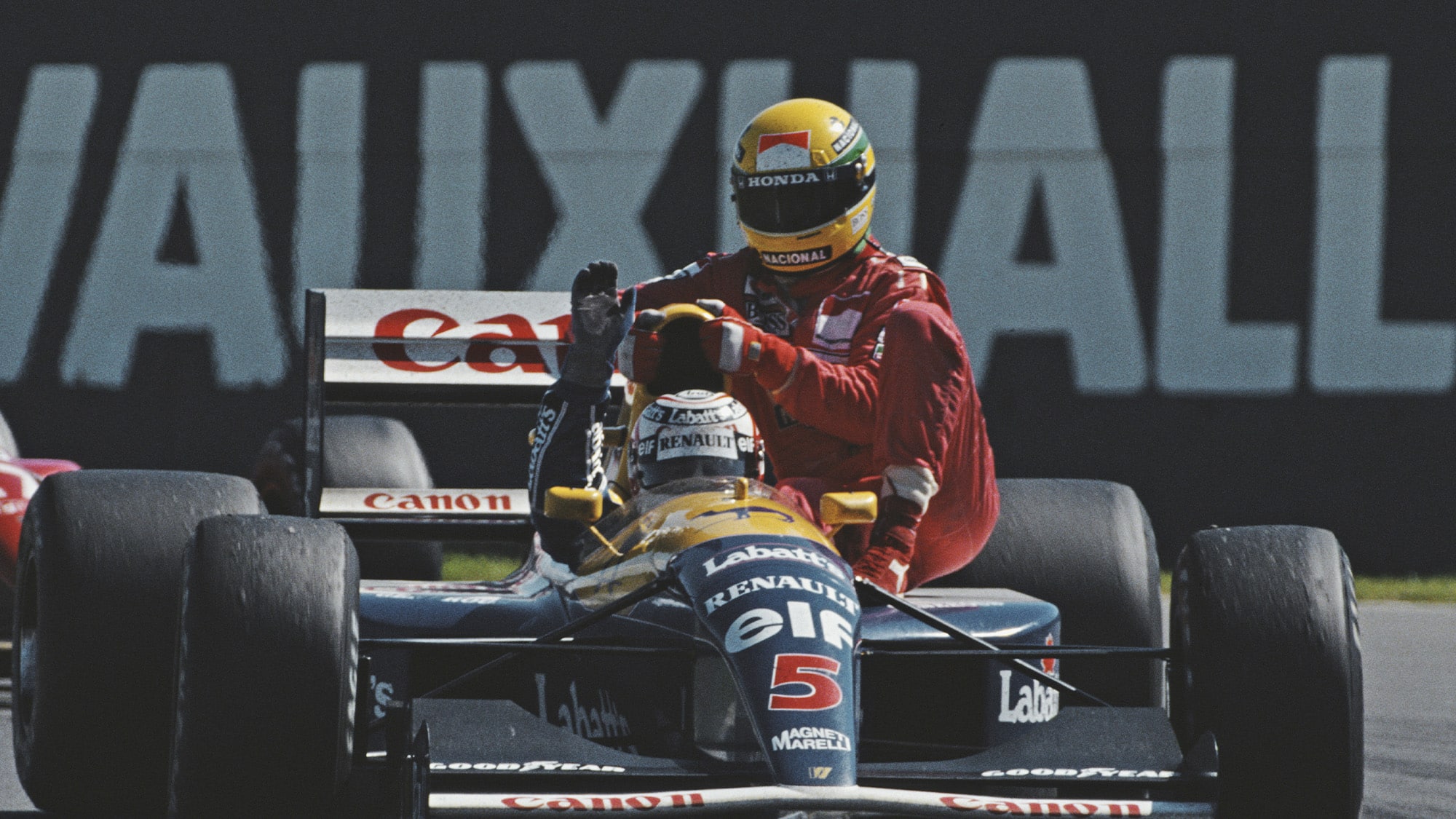
There only ever looked like being one winner at Silverstone in 1991, but it was the atmosphere that made it a magical afternoon: the thunderous encouragement from the grandstands; the taxi ride that Mansell offered to Senna; and the crowd that invaded the track to celebrate the win, then calmly returned to their seats for the support races.
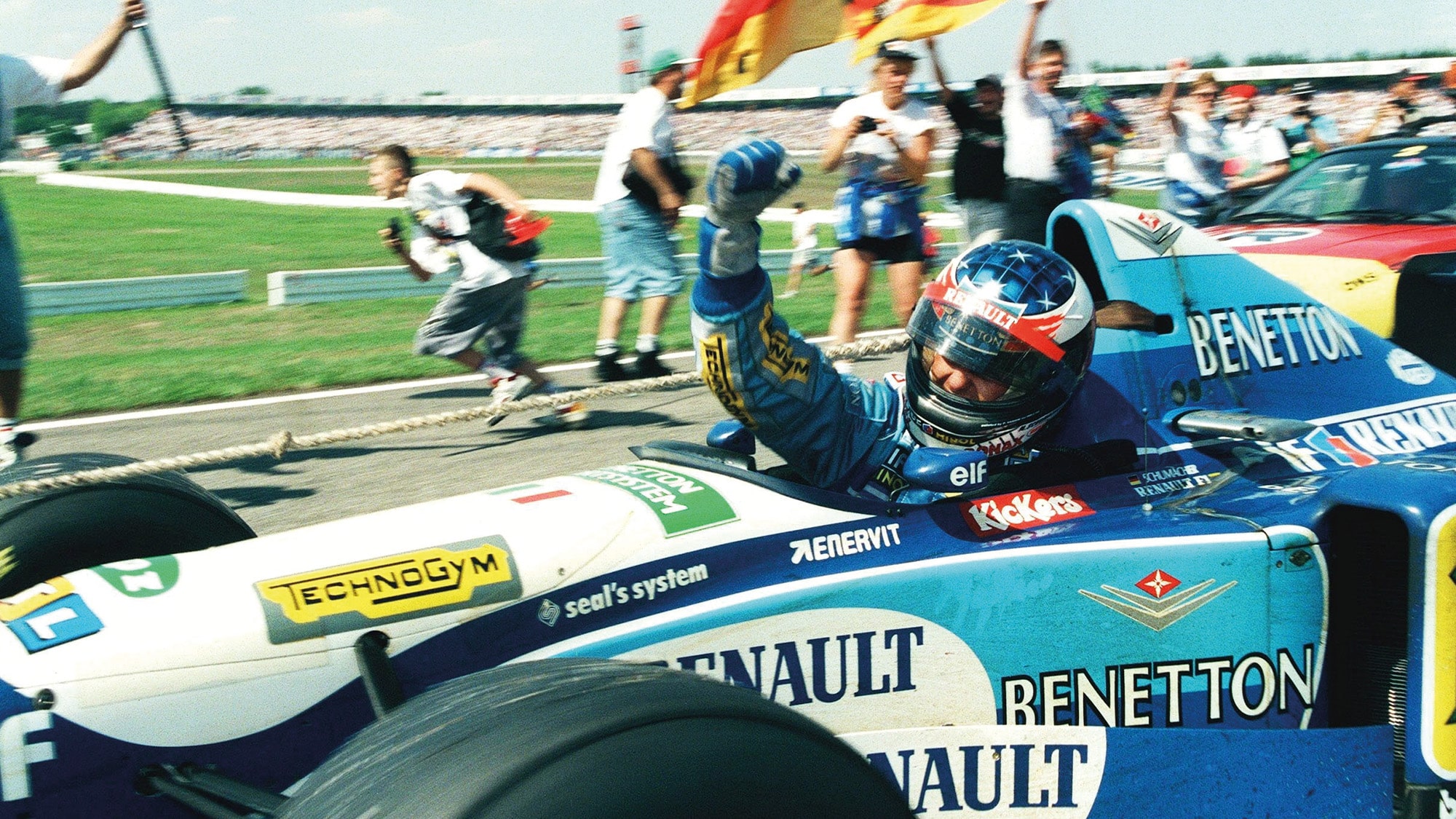
It looked like it was all going Damon Hill’s way, despite the crowd’s vocal support for Michael Schumacher. Pole position for the Williams driver, and searing race pace on the first lap made the race seem like a foregone conclusion… until lap two and a mistake that put Hill into the tyre wall.
Schumacher didn’t need a second chance. A two-stop race worked for the Benetton driver, whose superior pace left Williams’ David Coulthard well behind by the time he came in for a second stop,. He took the victory in front of Hockenheim’s stadium section, where thousands of German flags waving in unison.
Schumacher’s win was the first F1 championship win for a German driver on home soil, and the first of nine victories in Germany throughout his 91-win career.
Fernando Alonso 2012 European Grand Prix
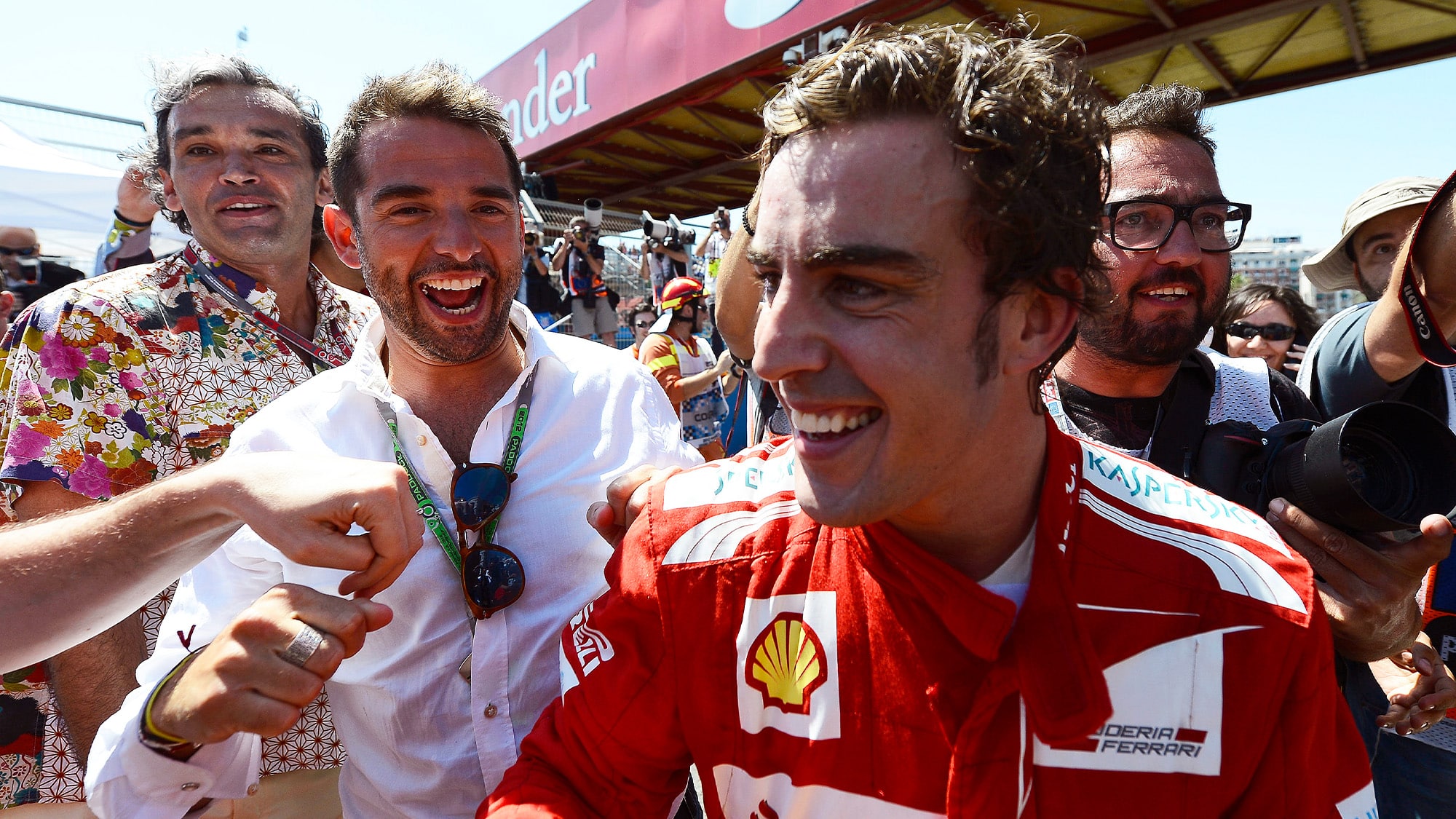
Perhaps Alonso’s greatest win, it took place in front of a joyfully partisan home crowd on the streets of Valencia.
A tyre choice error in qualifying left the Asturian down in 11th, but that was only a red flag to the Spanish bull. The home hero used all his overtaking acumen to work his way up to 2nd before an engine failure for Sebastian Vettel meant a ‘Nando win became inevitable.
Cue an emotional Alonso getting out of his car to celebrate in front of his fans.
Louis Chiron walks through the Principality with Monaco GP founder Anthony Noghes after winning in 1931
LAT
Louis Chiron 1931 Monaco Grand Prix
For the best part of a century, just one Monégasque driver had won the Monaco Grand Prix, all the way back in 1931 when Louis Chiron’sBugatti crossed the finish line first in only the third time that the race was held.
It’s not, we’ll grant you, an F1 win, but we’ve waved Chiron onto the list. He had championed the idea of a race through the Principality and came close to winning the previous year, in an exciting duel with Réné Dreyfus. Despite Chiron leading for most of the 100 laps, it was the Frenchman, a fellow Bugatti driver, who won by a margin of just two seconds.
The following year was nothing like as close. Starting behind Dreyfus and Achille Varzi, Chiron set the pace and took the lead on lap 27. The reaction was captured win the original Motor Sport report: “The public excitement was terrific for Chiron is a native of Monaco and a great favourite.”
From then on, Chiron was unassailable, eventually finishing almost four minutes ahead of Luigi Fagioli. He was the only Monegasque to win his home race until 2024, when Charles Leclerc secured victory in front of his his home crowd.
The dream come true: Leclerc victorious on the streets of Monte Carlo in 2024
Ferrari
Charles Leclerc 2024 Monaco Grand Prix
A young Charles Leclerc used to dream of winning the Monaco Grand Prix, while watching the race with friends, from their apartment balconies which had a view of the circuit.
In 2024, that vision came true with a victory that was charged with emotion. It wasn’t just Leclerc’s childhood ambition, but one that he’d shared with his late father Herve, who died from cancer a year before his son joined the F1 grid.
Our dream was to race and win Monaco in F1,” said Leclerc after the race. “I wouldn’t have imagined when I was younger I would race with Ferrari one day and win this race.
“I felt like I not only completed my own dream but also the one of my father. And of my mother, who has sustained me in everything I have done since then and who has been an incredibly strong woman when we all lost my dad.”
Charles Leclerc always looked like he was going to win the 2024 Monaco Grand Prix, says Mark Hughes. But his scintillating qualifying laps and emotional victory were in contrast to the featureless race
By
Mark Hughes
Leclerc started on pole after a qualifying lap so stunning that second-placed Oscar Piastri couldn’t quite believe the time he’d set. But the Ferrari driver didn’t take anything for granted — he’d already started on pole twice before and failed to win.
Nothing derailed his path to victory in 2024 however: a lap 1 crash meant that the field could all make their one pitstop under an early red flag, then spent the rest of the race managing their rubber. It may not have been dramatic to watch, but Leclerc had his own challenges as he led from lights to flag.
“I realised actually two laps to the end that I was struggling to see out of the tunnel just because I had tears in my eyes,” said Leclerc. “And I was like: ‘Charles, you cannot do that now. You still have two laps to finish.’”
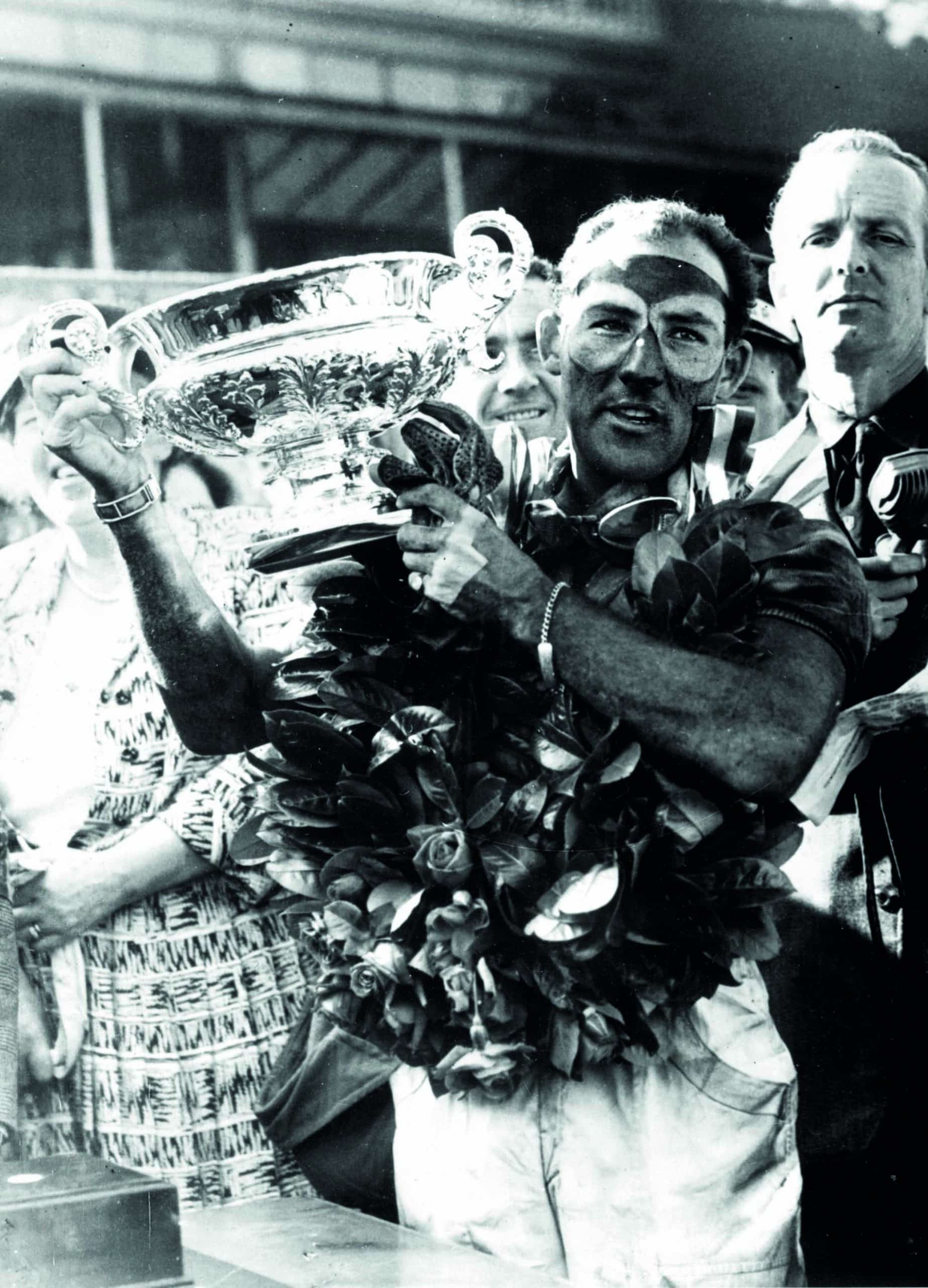
Who cares also, for this was a fine drive from Mr Motor Racing who started on pole, ahead of his hero and team-mate Fangio, who had won three of the four races so far that season.
Running round Aintree Racecourse, the two Silver Arrows drivers were the thoroughbreds of the field. Though they traded places in the early laps, the Brit ultimately led 80 of the Grand Prix’s 90 tours, threading through traffic so effectively that he at one point built a 9sec lead over the sister car.
A late-race surge from Fangio brought the cars nose-to-tail, as Moss backed off unsure, he later said, of what the team expected him to do.
“When the Old Man was still behind me at the final corner, I can tell you I gave it everything on the run up to the line!” he added, describing the moment hat he won his first world championship race by 0.2sec from Fangio.
Champions need more than raw speed alone, as demonstrated by Jim Clark at Silverstone in 1965, where a straightforward victory rapidly looked to be headed for disaster when his engine developed a misfire and then started losing oil.
Clark had started from pole in his Lotus 33 and was in a class of his own, with a 35sec lead over second-placed Graham Hill on lap 64, but his Climax engine was already making warning noises.
The sound hadn’t escaped the BRM pitcrew who urged Hill to charge down the race leader, who soon saw an alarming drop in oil level.
As the gap closed, and the Lotus’s oil failed even to reach the feed pipe when it sloshed to the side in corners, Clark came up with the creative solution of switching the engine off in those corners where it otherwise risked blowing up.
Somehow, his corner coasting method was losing him just 2sec per lap, and Clark nursed his car home with 3.2sec in hand over Hill.
The first Formula 1 World Champion is also the only one to have secured the title with a home win. By the time of the final race of the season at Monza, only Alfa Romeo drivers remained in contention; Juan Manuel Fangio at the top of the table, followed by Farina and Luigi Fagioli.
But it would be a race decided on reliability as Fangio, starting from pole, was forced to retire his car then commandeer the Alfa of team-mate Piero Taruffi. When that car’s engine expired, his challenge was over and Farina was headed for victory in the Italian Grand Prix and the championship.
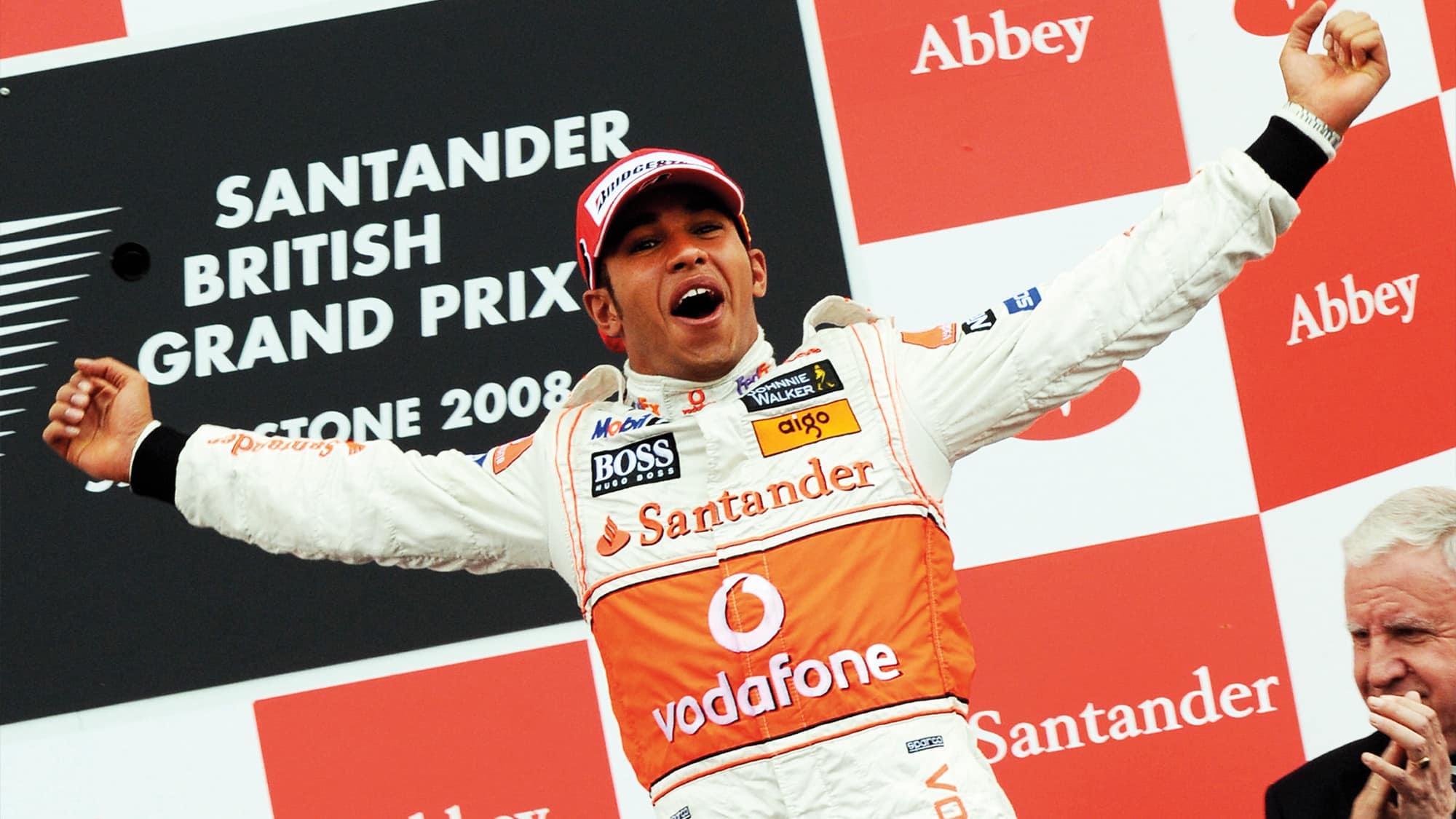
If there were still any doubts as to Lewis Hamilton’s talent a year and a half into his F1 career, they evaporated at Silverstone in 2008 — unlike the puddles on the circuit.
The wet race offered Hamilton an opportunity to demonstrate his brilliance. Starting fourth, he was up to second by the first corner and in the lead on lap five.
He navigated the rain showers expertly and won by more than a minute, with only two drivers — Nick Heidfeld and Rubens Barrichello — unlapped.
“This was the toughest race I have ever had, but also one of the best I’ve ever driven,” he said. “It was so extreme and slippery out there. Of course I always thank the team, but today I really need to, because my stops were perfect, and they always made the right decisions about tyre choice in the changing conditions. When I came round the last time I saw the crowd standing up, and I prayed, ‘Just finish, just finish…’”
Hamilton left at the top of the championship table, tied with Kimi Räikkönen and Felipe Massa.
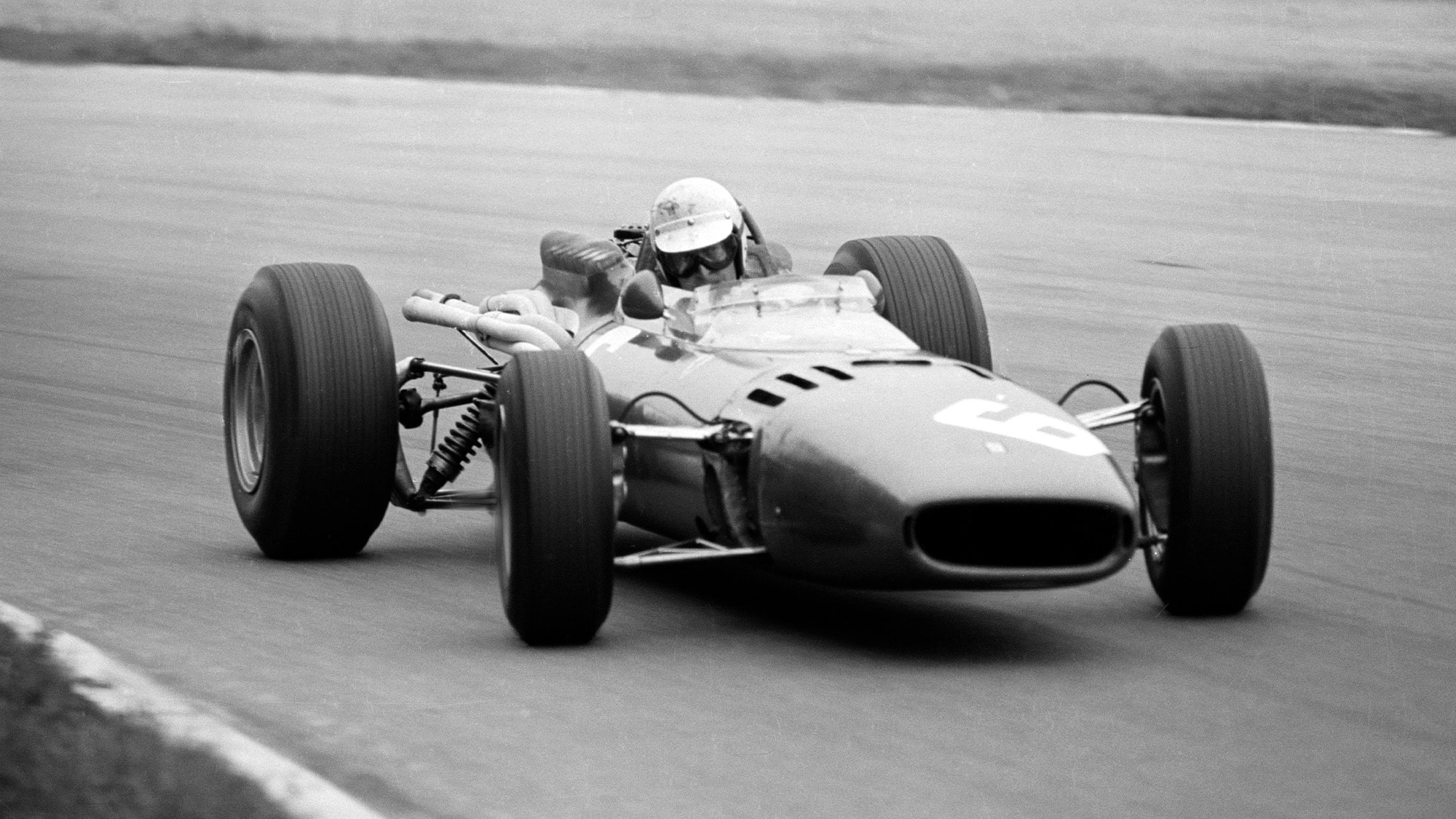
Scarfiotti won a single grand prix in his career. Not that any additional wins were likely to compare to the experience of a debut victory at Monza in a Ferrari. When you’re Italian.
Seventh after the first lap, Scarfiotti had worked his way into the lead by lap 13. As the race went on, he sat comfortably in the leas, as Mike Parkes and Denny Hulme battled behind for second.
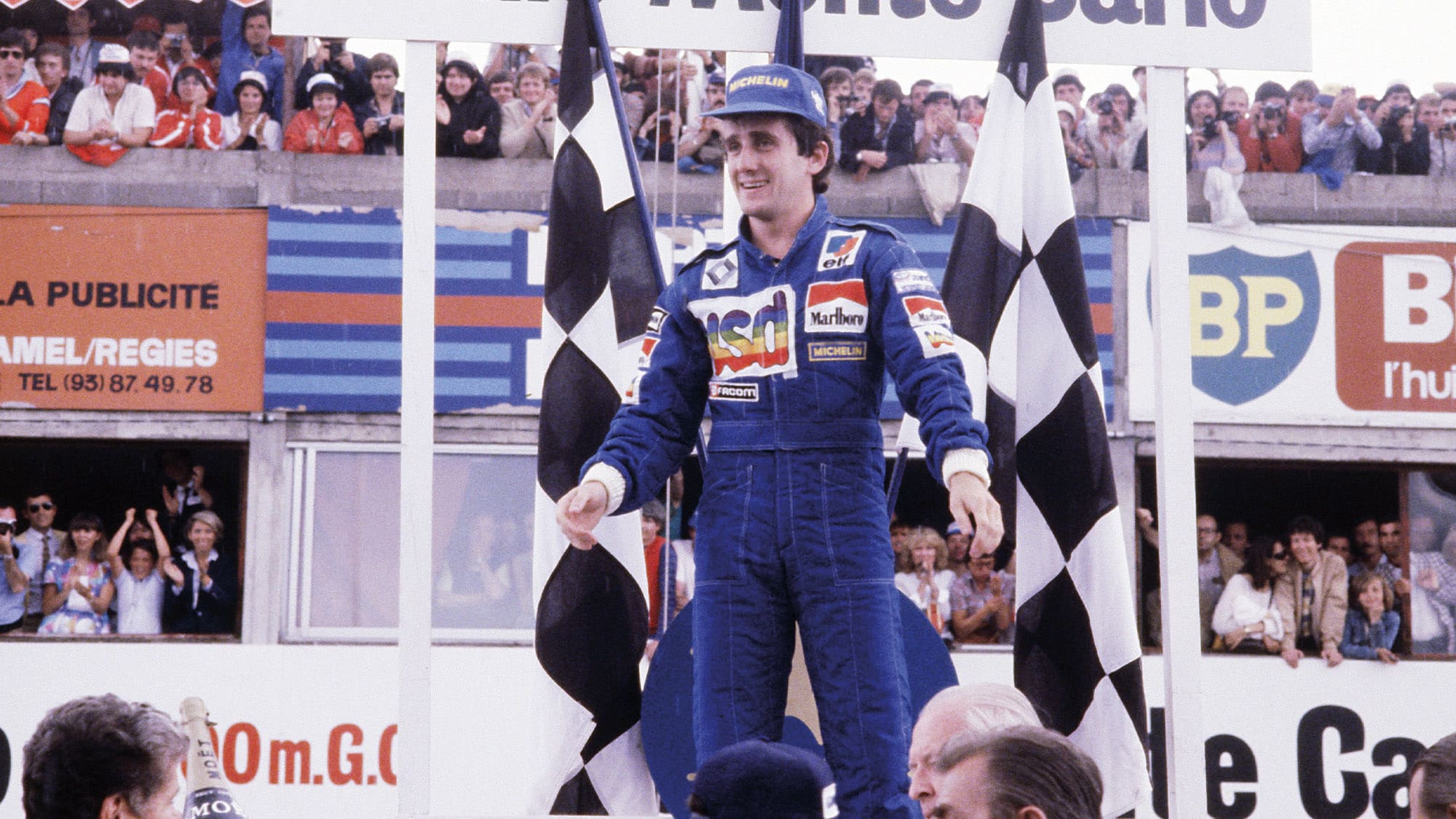
Your first Formula 1 race victory doesn’t need any gilding, but Alain Prost got the bonus of standing atop the podium in front of a home crowd at Paul Ricard.
The Renault driver had lost fourth gear, but was still catching the Brabham of race-leader Nelson Piquet who also had trouble, with a sticking throttle. Rain triggered a red flag, enabling both cars to be repaired, and it was Prost who got the jump on the restart, and disappeared into the distance; his soft-compound Michelin tyres bringing an advantage over Piquet’s harder Goodyears.
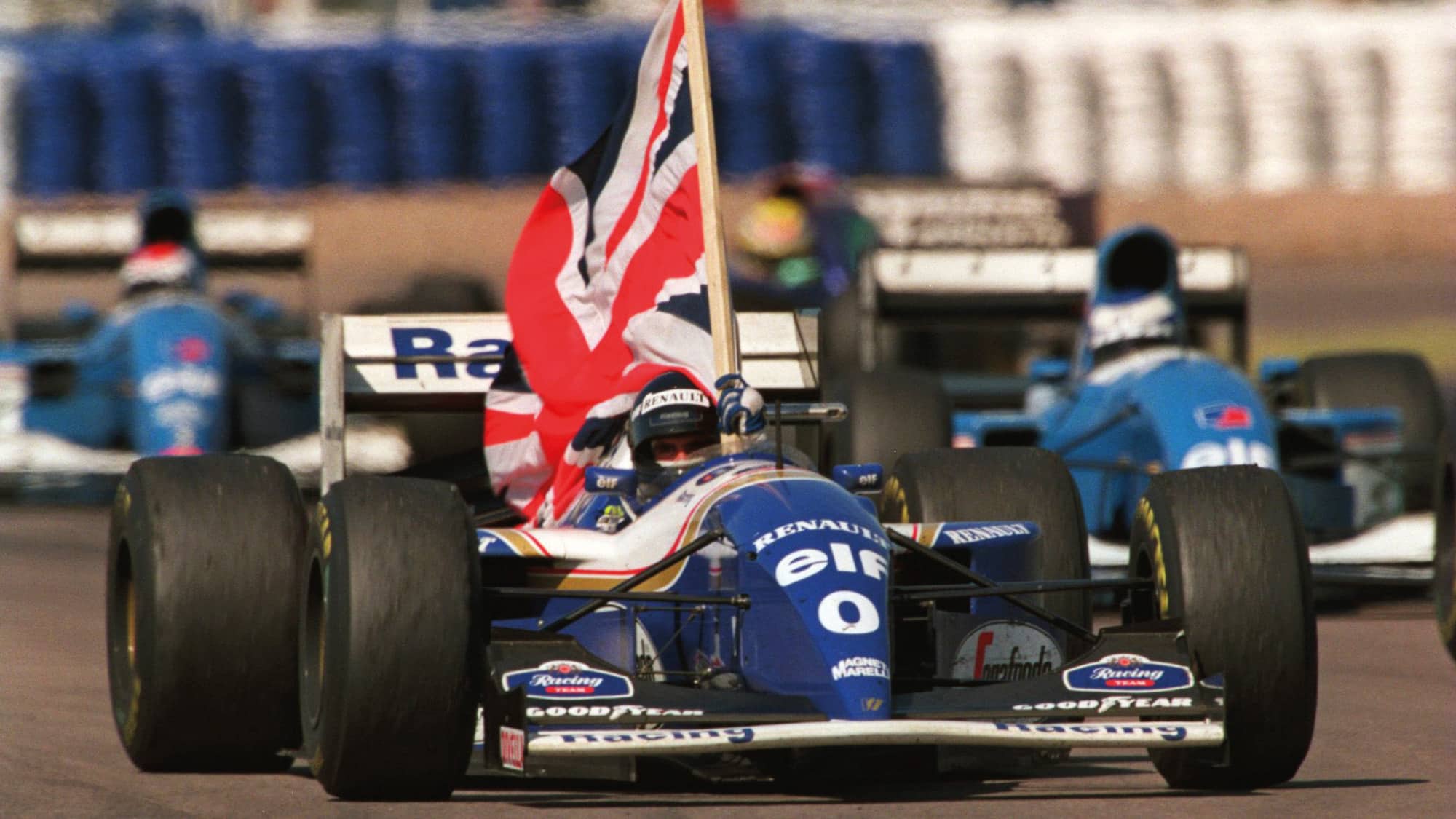
Hill was under immense pressure in ‘94 after being forced into taking the lead Williams driver role following Ayrton Senna’s death; he now also trailed Michael Schumacher 29 points to 70 in the drivers’ championship. Coming into Silverstone, only a home win would do, and that’s what he delivered.
“The scenes on the slowing down lap had to be seen to be believed,” recalled Hill. “Halfway round, a marshal stepped forward to hand me a Union Jack attached to what looked like a 12ft length of 4×2!
“The rules said that you’re not supposed to stop en route to parc fermé but I just managed to keep the car rolling while I collected this red, white and blue bedsheet! Having just completed a grand prix, I was a bit knackered. It was almost impossible to hold the thing up, steer the car and wave at the same time.”
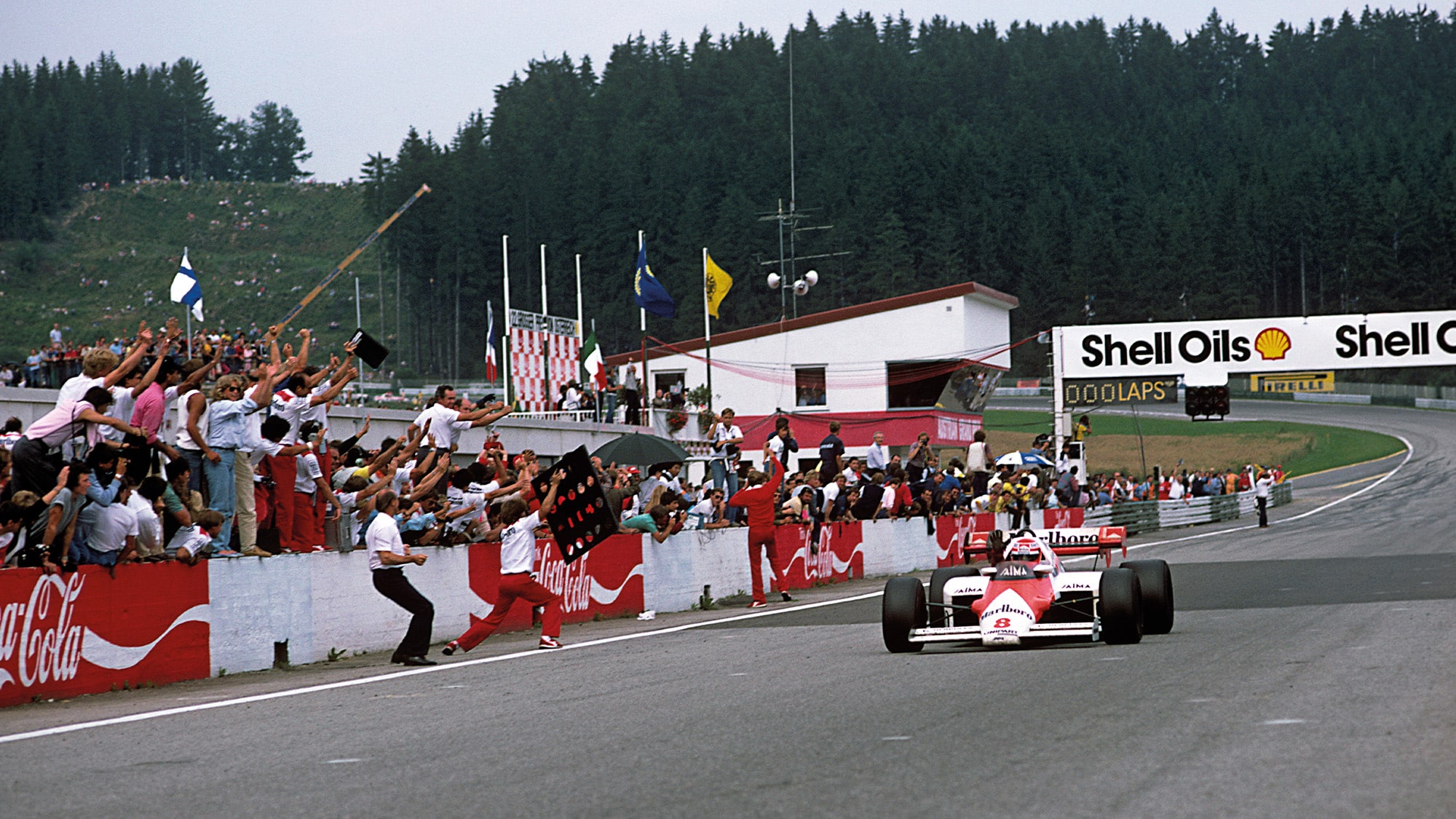
Niki Lauda knew that McLaren team-mate Alain Prost had him beaten on raw pace alone. Working on his race set-up, the Austrian managed to out-prof ‘The Prof’ by being in better shape of a Sunday.
This time out at the Osterreichring, Lauda was 3rd early on behind Prost, but his stablemate spun off on oil. The wily ‘Rat’ then closed down and passed Nelson Piquet to take his first and only home win — but only just.
As he crossed the line, “mayhem broke out in his gearbox,” reported Motor Sport. “As he finished his slowing-down lap and turned into the pitlane the jangling noise could be heard from quite a long way off.”
Flares from the Orange Army cast Verstappen’s win in a new light
Red Bull
Max Verstappen 2021 Dutch Grand Prix
The thrillingly tense title battle of 2021 saw Max Verstappen and Lewis Hamilton fight doggedly throughout the season, but on F1’s return to Zandvoort for the first Dutch Grand Prix since 1986, the identity of the winner was never in any doubt.
Driving beautifully, in a car that looked made for the revamped circuit, Verstappen took pole, despite his DRS not working towards the end of his final flying lap.
His race start was perfect — not that it was easy to see through the clouds of orange smoke that rolled over the circuit from the ‘Orange Army’ that filled the stands around the track.
The atmosphere was electric, even if the action at the front of the pack was predictable, with Verstappen pulling clear of Hamilton. He ended the race 20sec ahead to a rapturous reception from more than 100,000 fans, as well as Dutch King Willem-Alexander who’d been given a guided tour of the Red Bull pit garage by Verstappen earlier in the day.
“I know the fans of course have high expectations when you come here they want you to win, but it is never that straightforward before you get here,” said Verstappen. “An incredible feeling to win in front of the fans.”
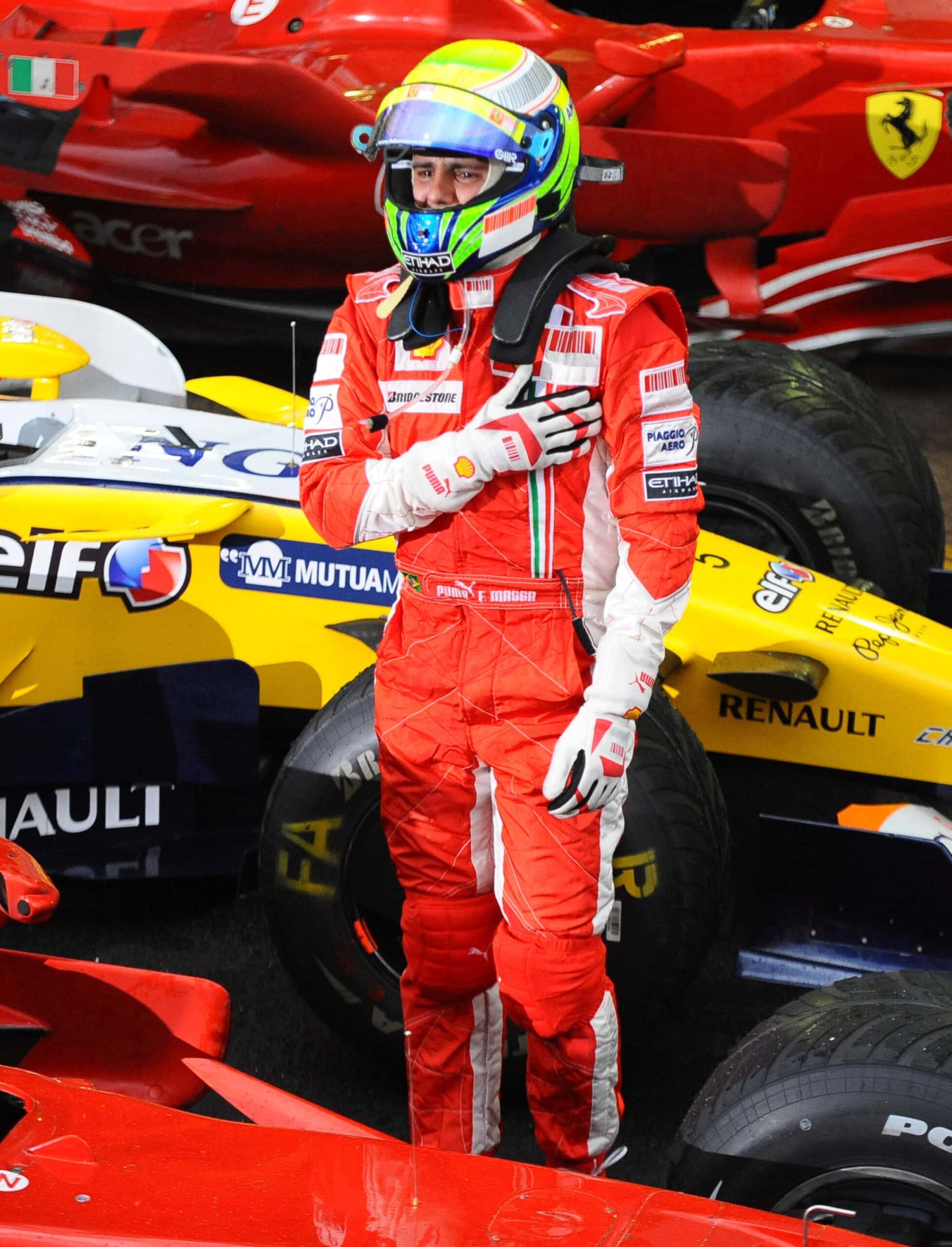
If you weren’t a Lewis Hamilton fan, then it looked to be the fairytale ending to a hard-fought season. The popular Felipe Massa could only become champion by winning at Interlagos and he did so in dominant fashion from pole.
Hamilton only had to finish fifth to deny the Brazilian but it was looking to be a tall order on a rainy afternoon. We all know how it ended: one corner less and Massa’s home crowd would have erupted with emotion.
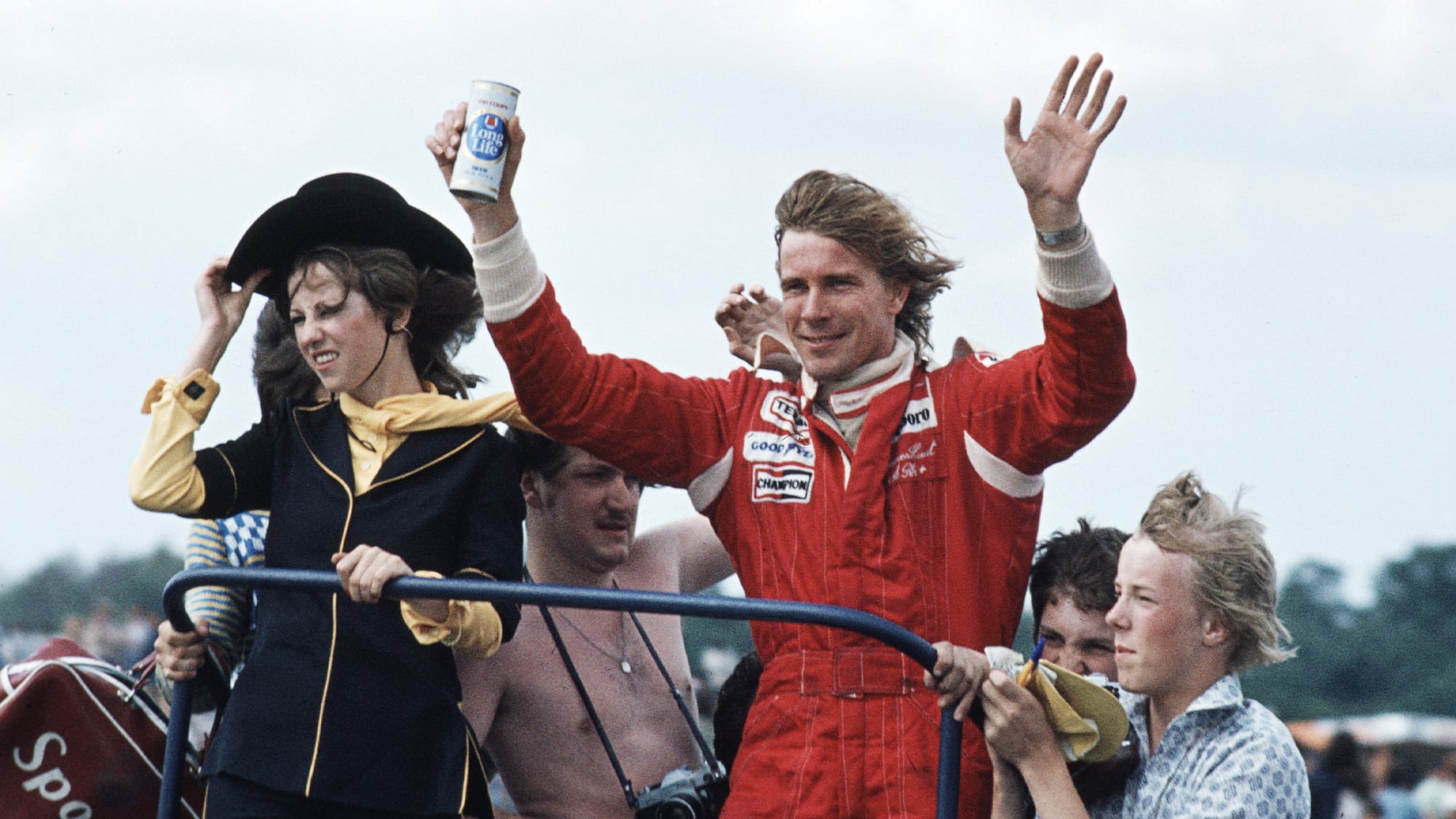
Nine grands prix into the 1977 Formula 1 season and reigning champion James Hunt had still not won a race, but his prospects were looking brighter in a McLaren M26 that was introduced mid-season and was steadily improving.
A podium finish at the previous round in Dijon further raised the expectations of the home fans at Silverstone, as did his pole position for the British Grand Prix. Then a poor start from Hunt left him fourth on the first lap, as John Watson sped into the lead.
As the race went on and Hunt recovered, the Silverstone crowd seemed assured of a home winner, but would it be Watson or the chasing Hunt?
The answer came sooner than expected, as Watson’s slowing Brabham headed for the pits with dropping fuel pressure and a jubilant Hunt sped towards the finish line.



 Great Read